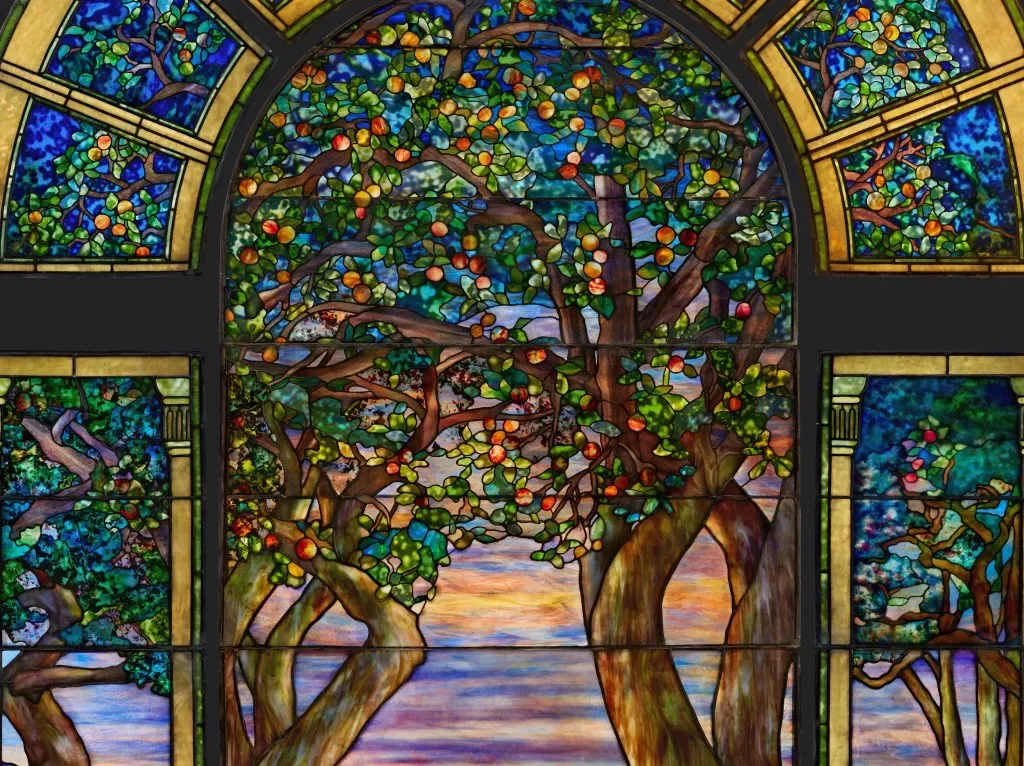
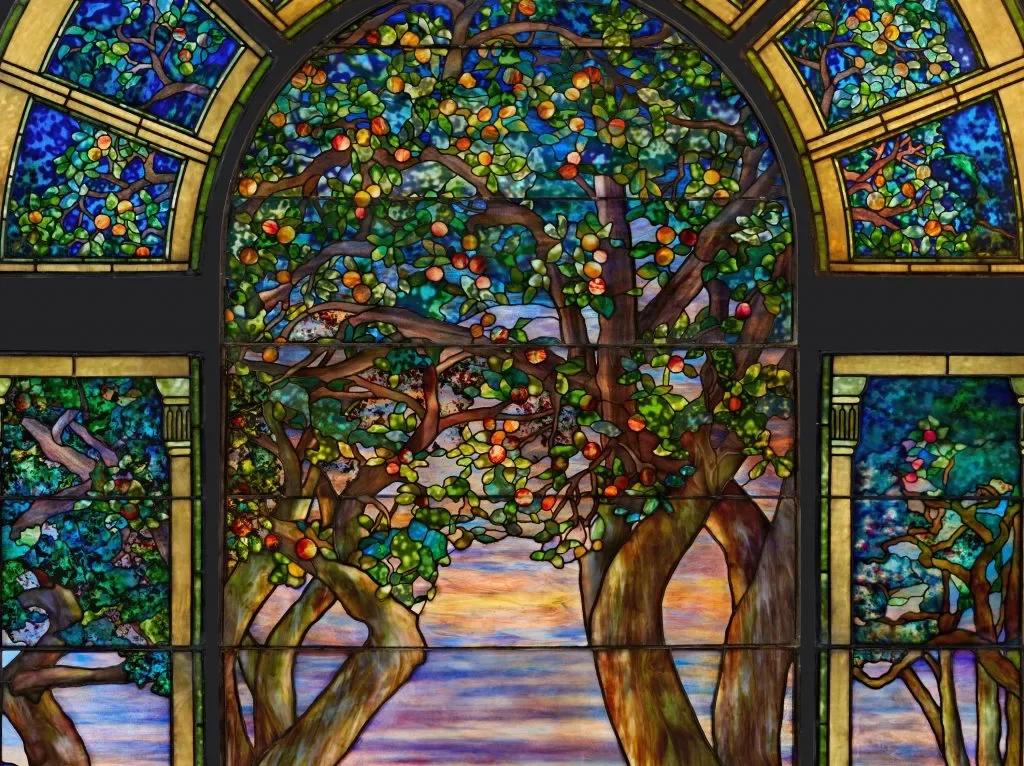
A detail from the "Danner Memorial Window". Photo: Sotheby's.
Introduction
Antique stained glass windows are among the most visually striking forms of decorative art found in historic buildings. Originally created for churches and civic architecture, stained glass was also widely incorporated into residential homes, hotels, and commercial buildings during the late nineteenth and early twentieth centuries. Today these windows occupy a distinctive place in the art and antiques market, appealing to collectors, preservationists, architectural historians, and interior designers. For owners who inherit or discover stained glass windows in older properties, understanding their historical context and market position can help clarify both their cultural significance and their potential value.
Historical Background
The use of colored glass in architectural windows dates back to the medieval period, when large narrative compositions were installed in European cathedrals to depict religious scenes and biblical stories. These early windows were assembled from small pieces of colored glass joined together by lead cames, a construction technique that remains fundamental to stained glass fabrication.
The modern decorative stained glass market expanded significantly in the late nineteenth century, particularly in the United States and Europe. This expansion coincided with the rapid growth of urban architecture and the popularity of artistic movements that emphasized decorative surfaces and craftsmanship. The Aesthetic Movement encouraged the integration of beauty and design into everyday objects and architectural elements, including windows.
By the early twentieth century, stained glass had become a common architectural feature in many residential and commercial structures. Manufacturers produced both custom studio work and catalog designs that could be ordered and installed in newly constructed buildings. Many surviving examples today come from this period of architectural growth between approximately 1880 and 1925.
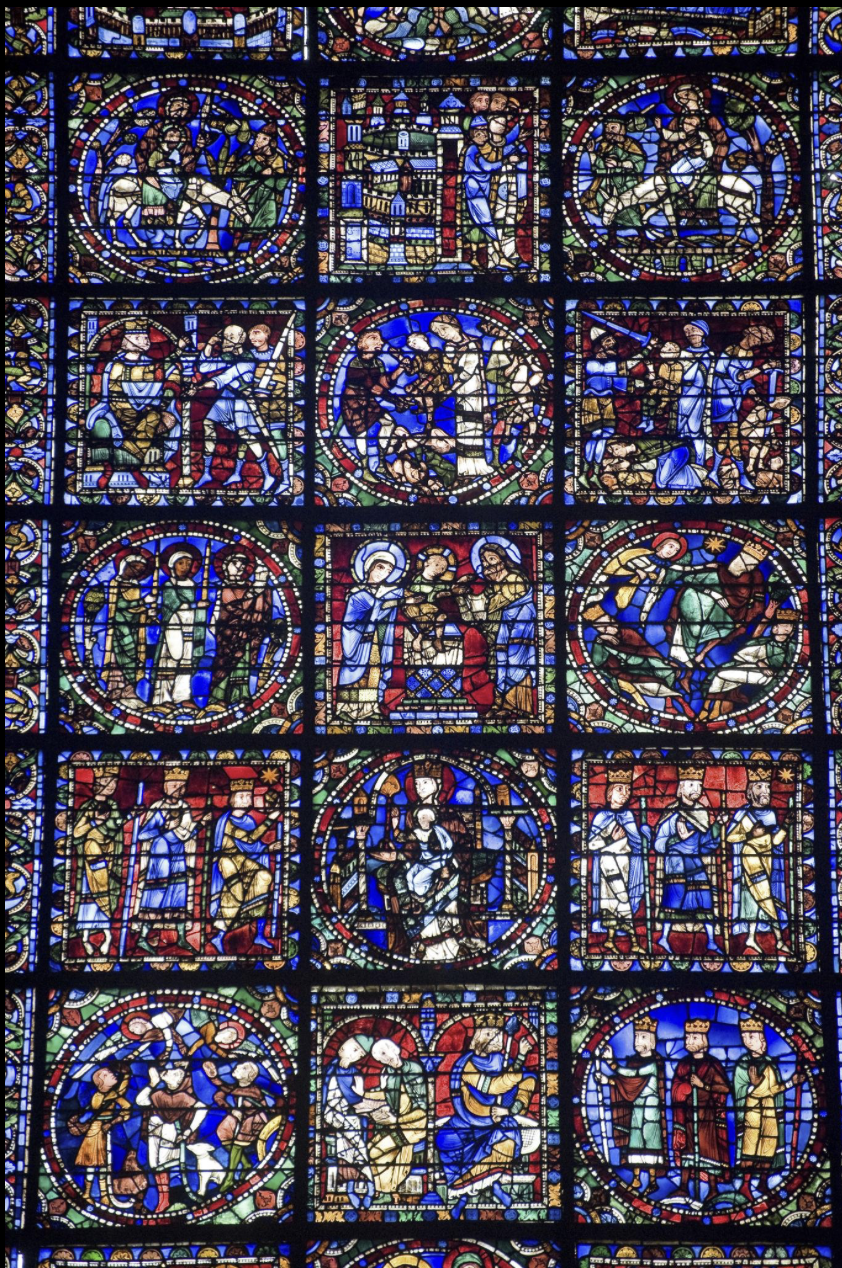
Chartres (France), Cathedral interior, stained glass window
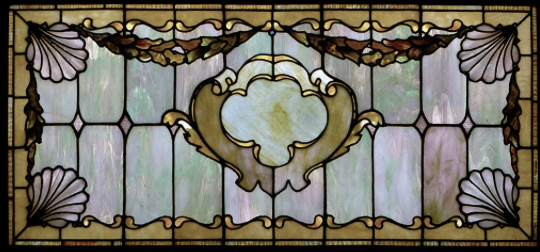
Tiffany Studios Mermaid Window, 1899 (MS Rau), One transom from 6-part set of windows for sale
Important Designers and Studios
Several artists and studios played a significant role in shaping the stained glass market during the late nineteenth and early twentieth centuries. Among the most influential figures in American stained glass was Louis Comfort Tiffany, whose studio developed innovative opalescent glass that created painterly color effects without relying heavily on painted detail. Tiffany Studios produced both ecclesiastical and domestic windows and remains the most widely recognized name associated with American stained glass.
Another important innovator was John La Farge, who experimented with layered glass techniques and complex coloration in the late nineteenth century. His work helped establish the artistic potential of stained glass beyond purely architectural ornament.
In addition to these prominent designers, numerous large commercial studios operated in industrial cities such as Chicago, Cincinnati, and Pittsburgh. These workshops supplied decorative windows for residential homes, hotels, and commercial buildings across the United States. Smaller regional workshops also produced stained glass using pattern books and catalog designs. As a result, many historic buildings contain windows that were created by skilled craftsmen but are not individually signed or attributed.
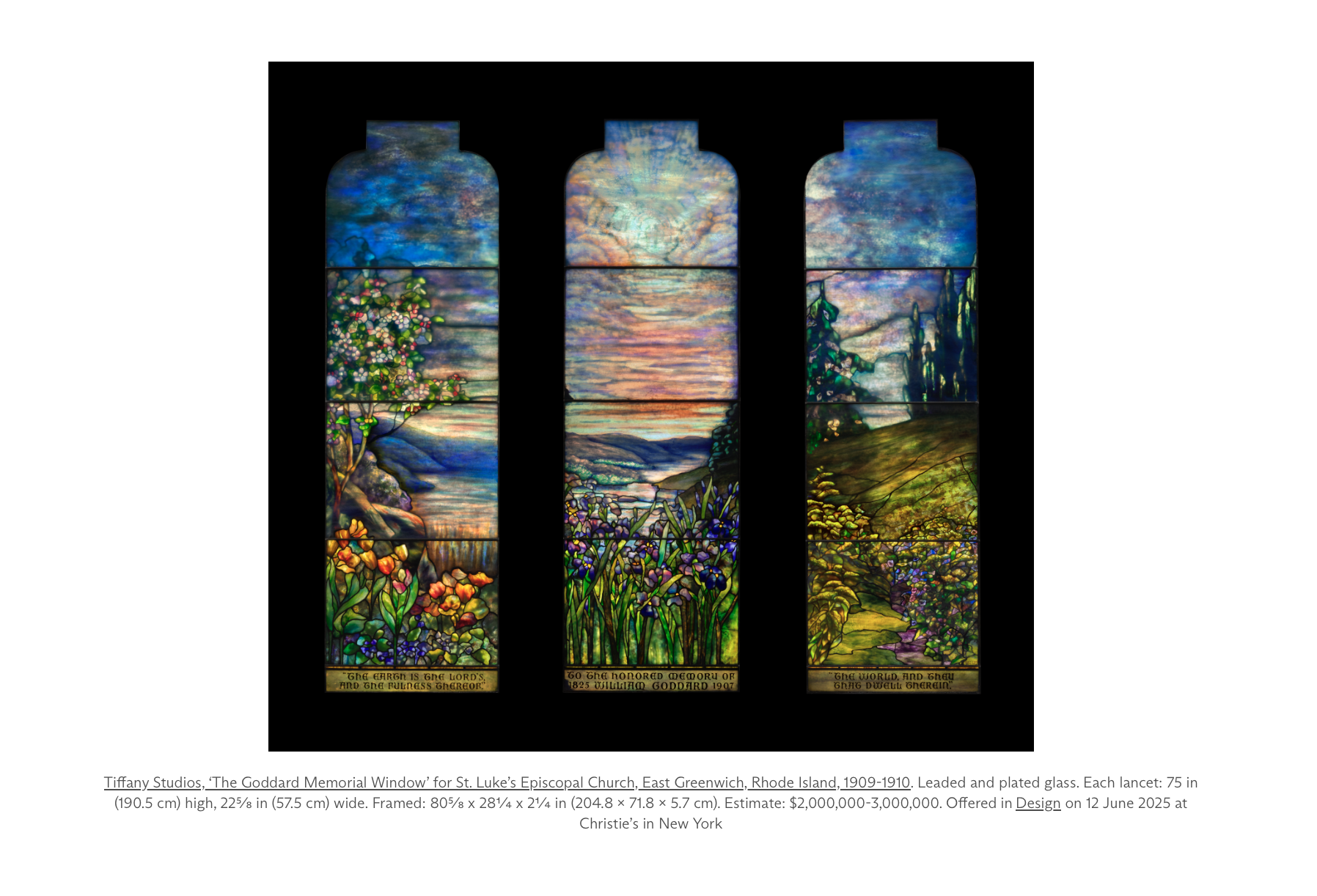
TIFFANY STUDIOS, 'The Goddard Memorial Window' for St. Luke’s Episcopal Church, East Greenwich, Rhode Island, 1909-1910 Photo: Christie’s
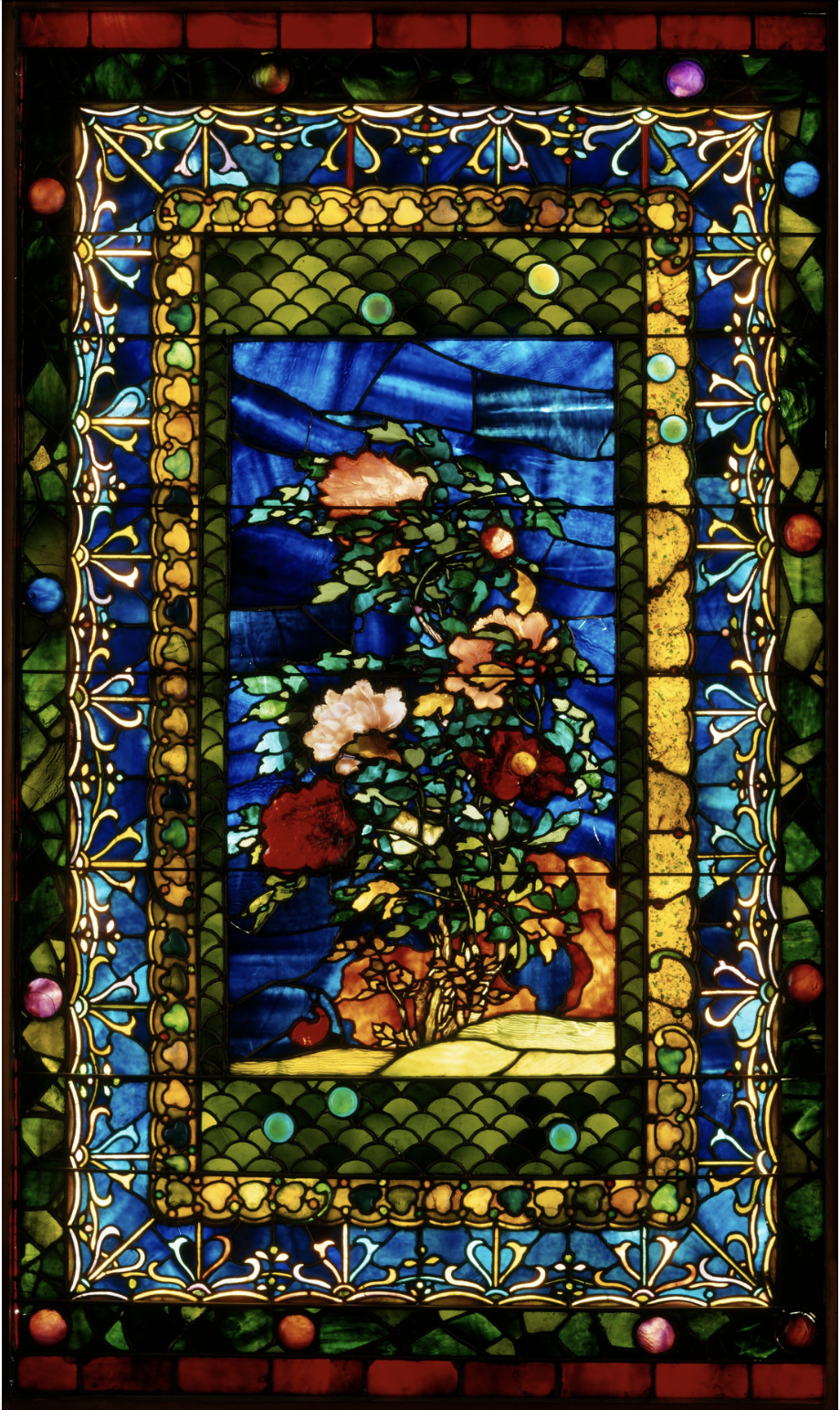
Peonies Blown in the Wind, John La Farge, American, ca. 1880, Photo: Metropolitan Museum of Art, NYC
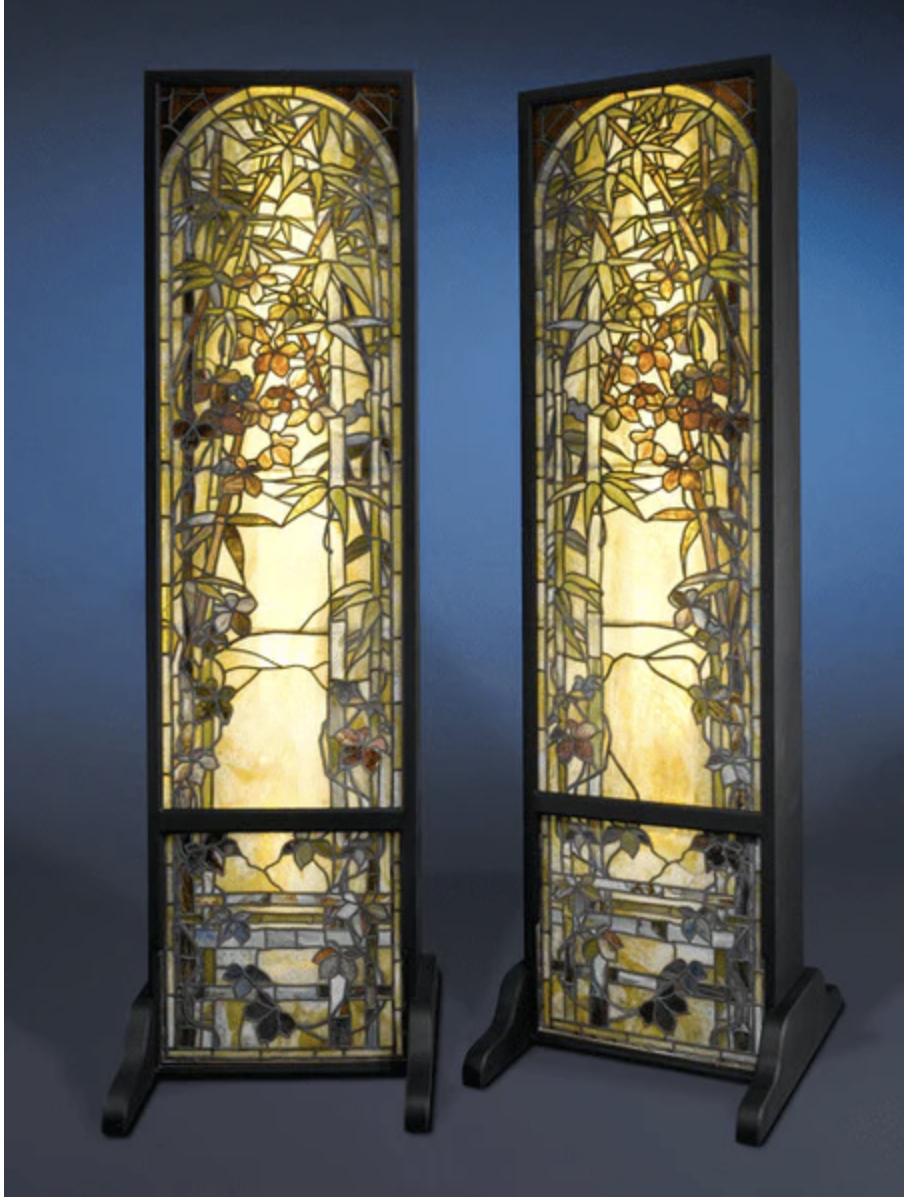
This extraordinary pair of Tiffany Studios stained glass windows exhibits the brilliance and outstanding ability that distinguish the work of Louis Comfort Tiffany from that of his peers. Circa 1910. Photo: M.S. Rau
Styles and Periods
Antique stained glass windows can often be associated with particular artistic styles and design movements. Windows from the Victorian period, generally dating from about 1860 to 1900, often feature geometric layouts, jewel toned color palettes, decorative borders, and repeating motifs. These designs frequently appear in residential transoms, stairwells, and entryways.
The Aesthetic Movement of the late nineteenth century emphasized decorative beauty and harmony within the interior environment. Stained glass designs from this period often incorporate stylized botanical forms and symmetrical arrangements.
Art Nouveau, which flourished between approximately 1890 and 1915, introduced more fluid and organic compositions inspired by plants and natural forms. Curving lines, floral imagery, and flowing patterns became common design elements during this period.
In the early twentieth century, Prairie Style architecture introduced stained glass windows with strong geometric patterns and an emphasis on horizontal lines. These designs reflected a broader architectural shift toward simplified forms and integrated decorative elements.
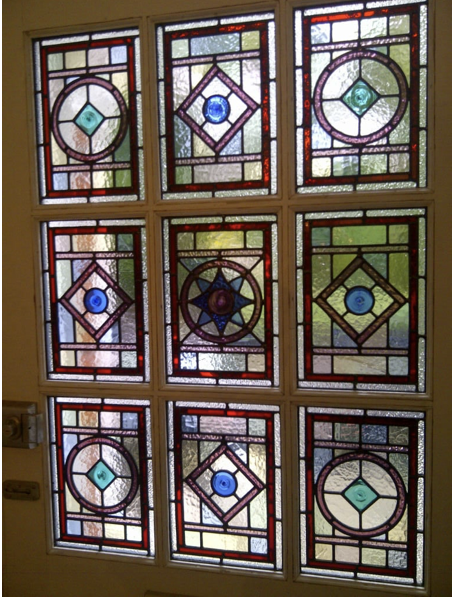
Victorian geometric stained glass window, Photo: Coriander Stained Glass UK
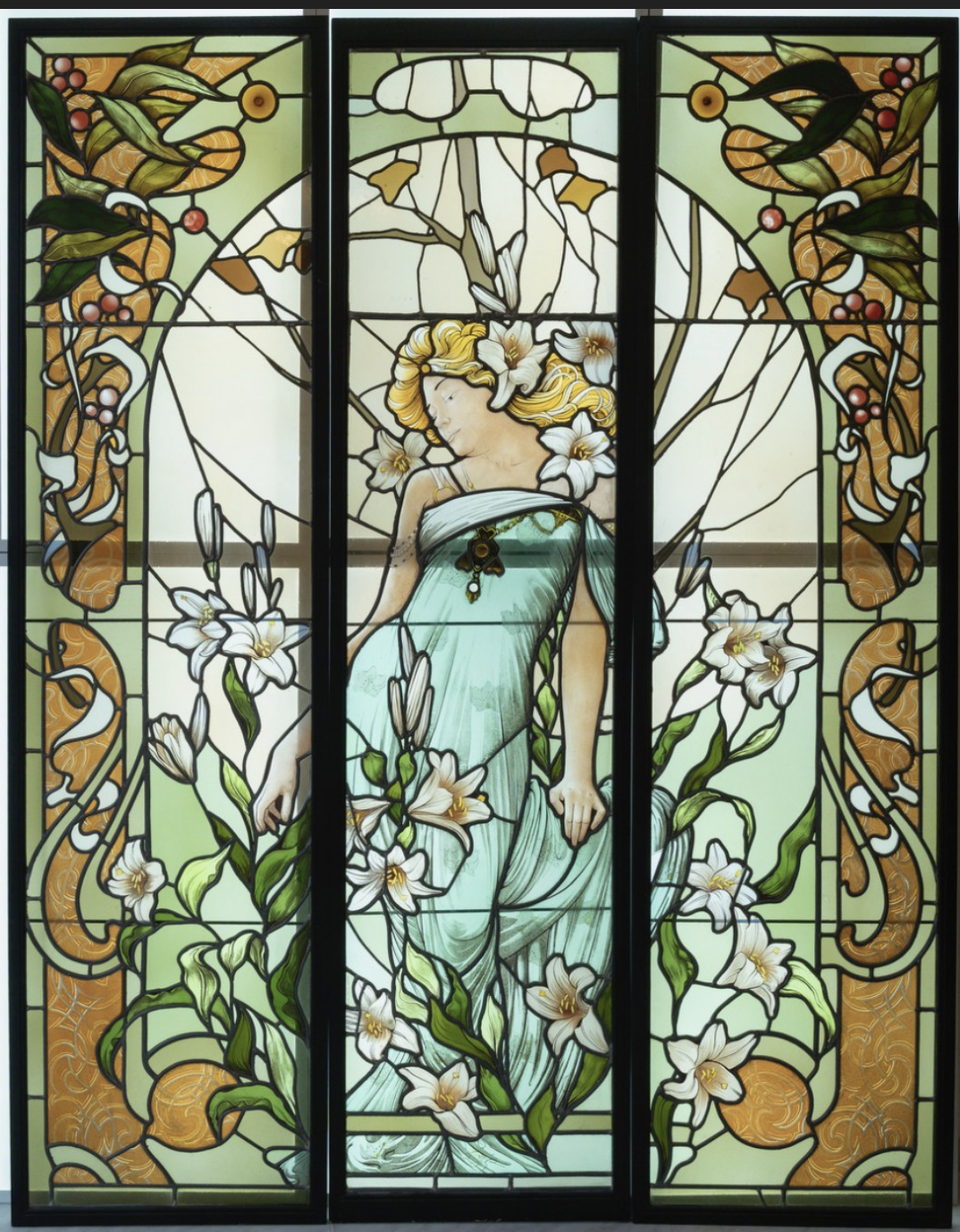
Art Nouveau Stained Glass Window, Woman With Lilies, Circa 1920, Art Nouveau stained glass triptych in grisaille and enamels, French worK, Circa 1920. Photo: AnticStore/Acropole Antiquités
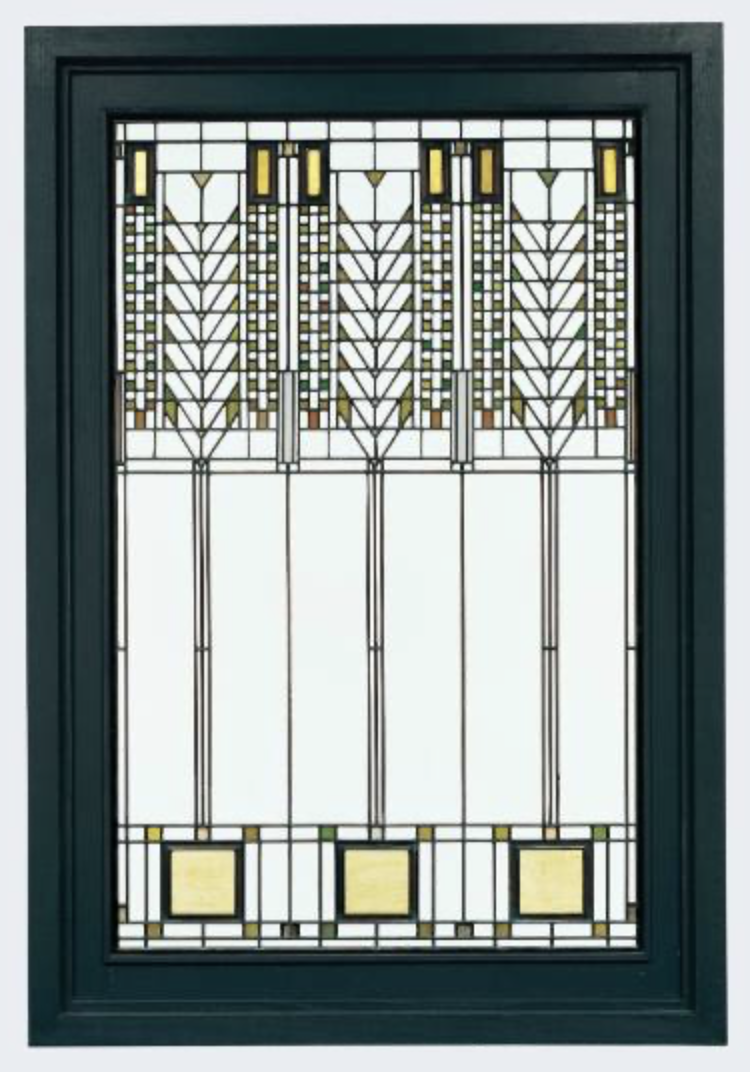
Prairie Style: Tree of Life, Frank Lloyd Wright, 1904, Photo: Corning Museum of Glass
Regional Traditions
Different regions developed distinctive stained glass traditions during the nineteenth and early twentieth centuries. In the United States, Midwestern manufacturing centers became major producers of residential decorative windows, while Tiffany Studios in New York dominated the high end artistic market.
In the United Kingdom, the Gothic Revival movement supported a strong tradition of ecclesiastical stained glass throughout the nineteenth century. Central European glassmakers, particularly those working in Bohemia, were known for technical skill and vibrant coloration. France developed its own distinctive style during the Art Nouveau period, especially in cities such as Nancy where artists produced highly expressive floral compositions.
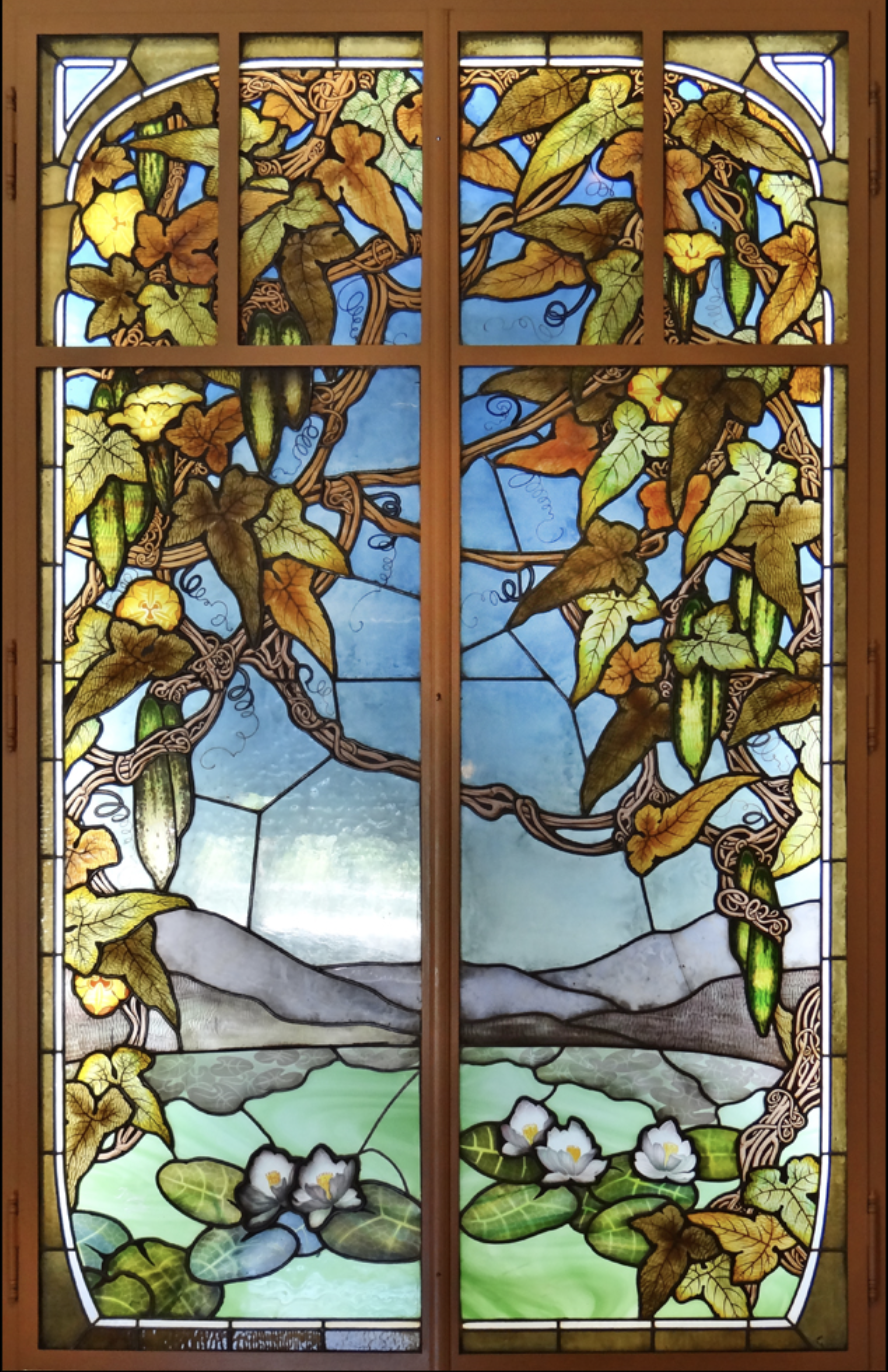
Nancy School: Vitrail Luffas et Nymphéas, Jacques Gruber (1870-1936) Photo: Wikipedia
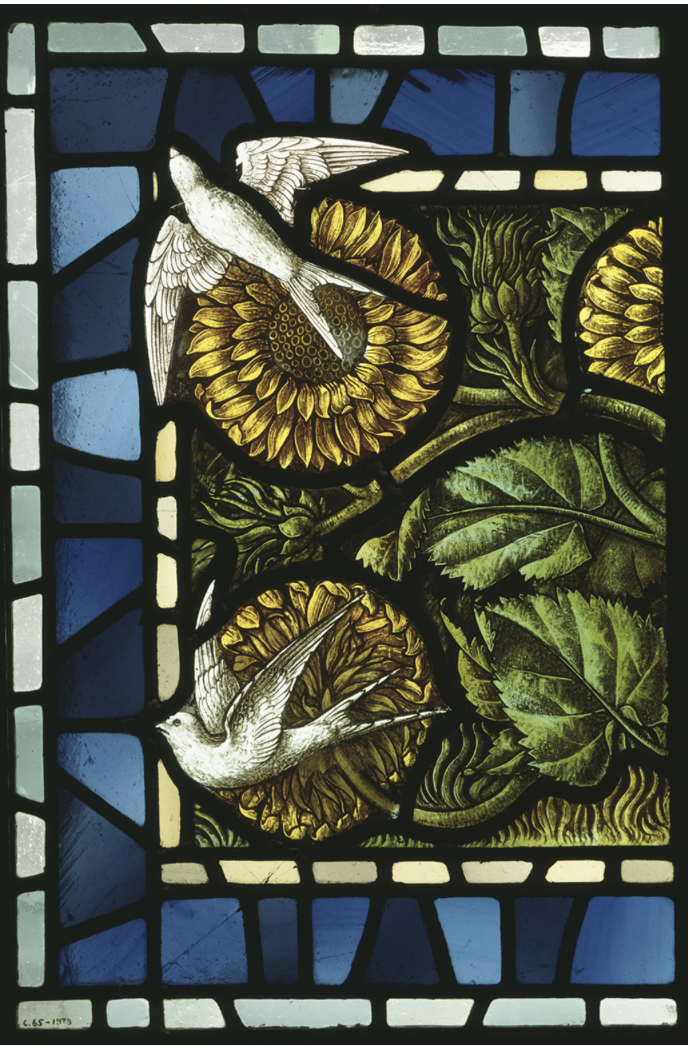
Gothic Revival Style: Panel, stained and painted glass, designed by Carl Almquist, made by Shrigley and Hunt, about 1886, England. Museum no. C.65-1978. Given by D. C. N. Hudson. Photo: Victoria and Albert Museum, London
How to Identify Antique Stained Glass
Several characteristics can help determine the approximate age and origin of a stained glass window. One important factor is the type of glass used. Older windows frequently contain hand rolled or opalescent glass with visible texture and variation in color.
The construction method also provides clues. Traditional windows are assembled with lead cames that form the network of lines separating each piece of glass. Over time these lead lines can develop a characteristic patina that reflects age and exposure.
Design patterns may also provide insight into the origin of a window. Catalog produced windows often feature repeating geometric motifs or symmetrical borders that were widely used in residential architecture around the turn of the twentieth century.
In some cases a window may include a small panel bearing the signature or mark of a studio, although many examples remain anonymous.
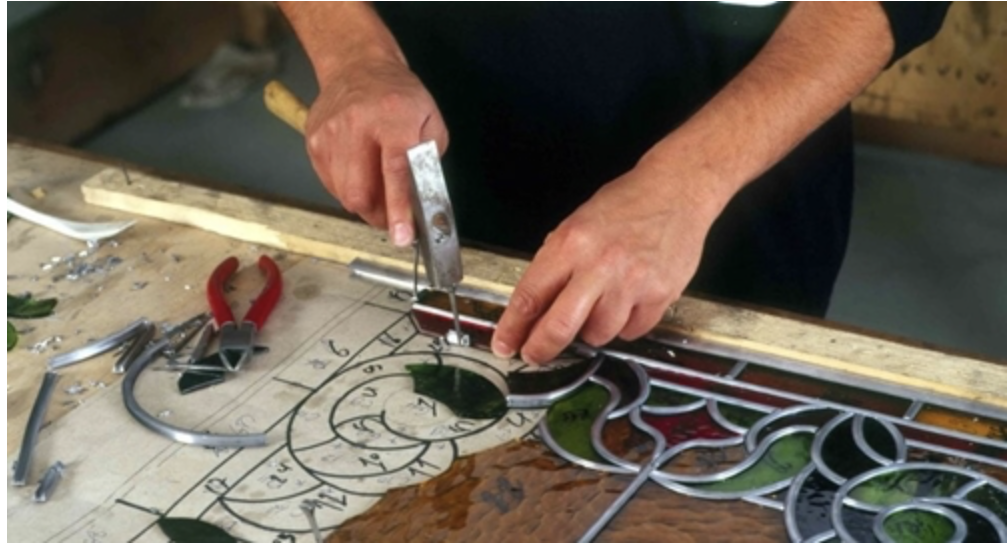
This picture shows an artist wrapping the glass in lead came. Photo: Stainedglassyourway.com
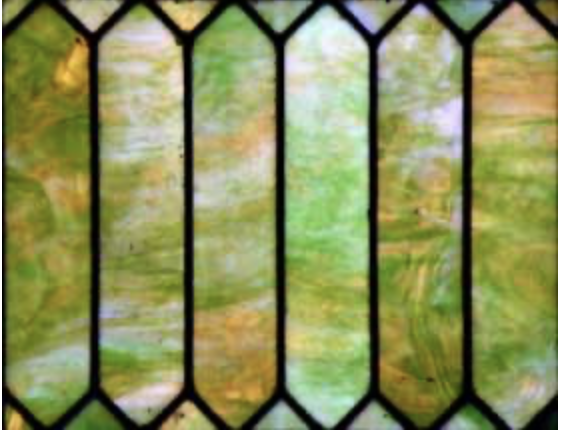
Opalescent Glass Close-up of Nave Windows - Holy Trinity Lutheran Church, 1080 Main Street, Buffalo, NY
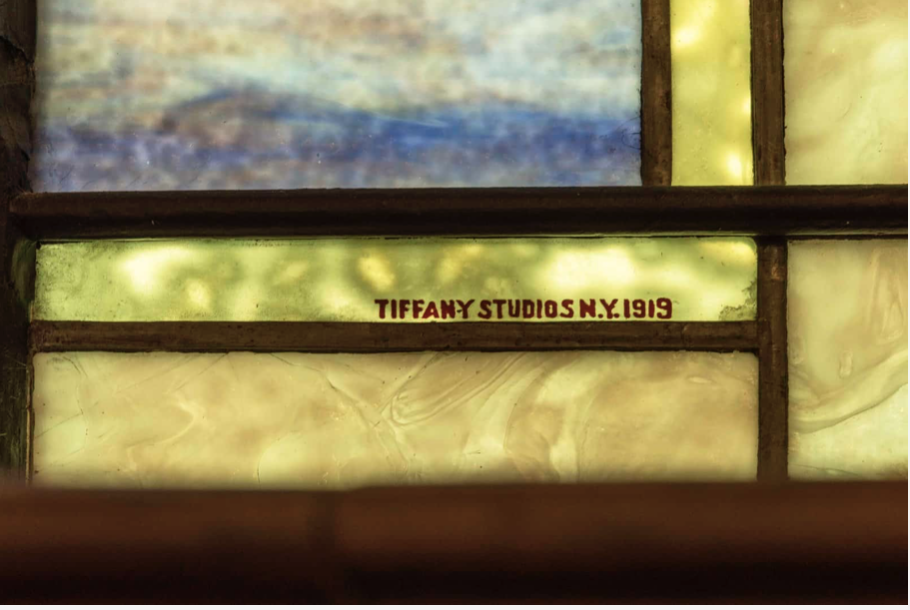
Signed Tiffany window panel: Detail of the Sarah Ann Derr memorial window, bottom, Photo: Allentown Art Museum
Market Values and Auction Records
The market value of stained glass windows varies widely depending on attribution, artistic quality, size, condition, and provenance. At the very top of the market, rare and well documented works associated with major studios have achieved museum level prices at public auction.
One notable benchmark is Tiffany Studios’ Danner Memorial Window, which sold at Sotheby’s in November 2024 for $12.48 million, establishing a record for the studio. Christie’s followed with another major result in June 2025 when Tiffany Studios’ Goddard Memorial Window realized $4.285 million. Later in December 2025 Christie’s sold Tiffany Studios’ Birches and Irises landscape window for $571,500.
While these results illustrate the potential value of exceptional studio works, they do not represent the broader market for most surviving stained glass windows. The majority of late nineteenth and early twentieth century residential windows without clear attribution sell at public auction for significantly lower amounts. Many decorative architectural panels trade in the hundreds to low thousands of dollars depending on their size, condition, and decorative appeal.

TIFFANY STUDIOS, 'Birches and Irises' Landscape Window, circa 1915 Photo: Christie’s
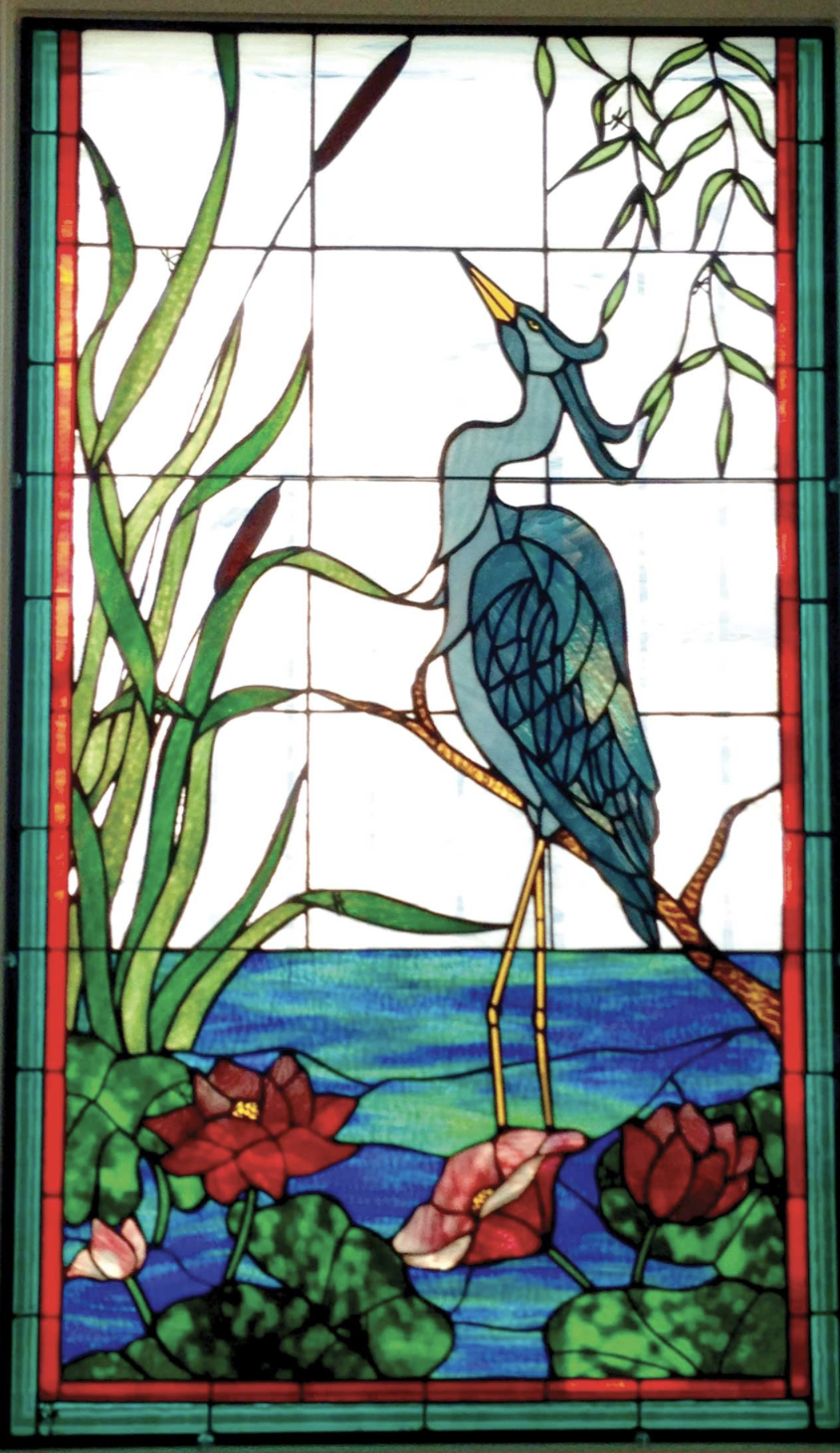
Decorative Panel: Standing crane residential window in Locust Hill, by Wanda Greenwood Hollberg of Greenwood Stained Glass, Urbanna. Photo: Thehouseandhomemagazine.com
Market Trends Over the Last Five Years
Over the past five years the stained glass market has shown strong demand for high quality works associated with important studios, particularly Tiffany. Dedicated decorative arts auctions featuring Tiffany material have continued to attract strong collector interest.
At the same time, the broader market for architectural stained glass has remained more selective. Transporting, restoring, and reinstalling historic windows can be expensive, which narrows the pool of potential buyers for some examples. As a result, many architectural windows trade primarily based on decorative appeal and ease of installation rather than historical attribution alone.
Outlook for 2026
Looking ahead to 2026, the most likely scenario is continued strength for exceptional studio works and a stable but selective market for typical architectural stained glass. Windows with clear attribution to recognized designers are expected to remain competitive in the decorative arts market.
More common residential windows will likely continue to trade primarily on decorative usability, condition, and size. Overall, the outlook for the stained glass market can be described as cautiously positive, with strong interest in the best material and steady demand for decorative architectural examples.
Where Stained Glass Is Bought and Sold
Stained glass windows change hands through several segments of the art and antiques market. Major auction houses occasionally offer important examples, particularly those associated with Tiffany Studios or other recognized designers.
Architectural salvage dealers represent another major source of historic windows, especially those removed from buildings during renovation or demolition. Antique dealers specializing in decorative arts frequently sell stained glass panels for use in interior design. Private collectors may also acquire individual windows or panels for display as standalone artworks.
Collector Checklist
Five Quick Things to Look for in Antique Stained Glass
Many homeowners encounter stained glass windows in older buildings without knowing whether they are decorative architectural elements or potentially significant works of design. The following checklist provides a useful starting point:
1.Look at the type of glass. Older stained glass often uses hand rolled or opalescent glass that shows visible texture and color variation.
2.Examine the lead lines. Traditional windows are assembled using lead cames that form the network of lines between glass pieces.
3.Check for studio signatures or plaques. Some windows include a small signature panel with the name of the studio or designer.
4.Observe the design style. Geometric Victorian designs, floral Art Nouveau patterns, and Prairie Style compositions can help date a window to a particular architectural period.
5.Consider the building’s construction date. Many residential stained glass windows in North America were installed between about 1880 and 1925.